
The Nepal Riots, Explained
By Hannah Tiernan

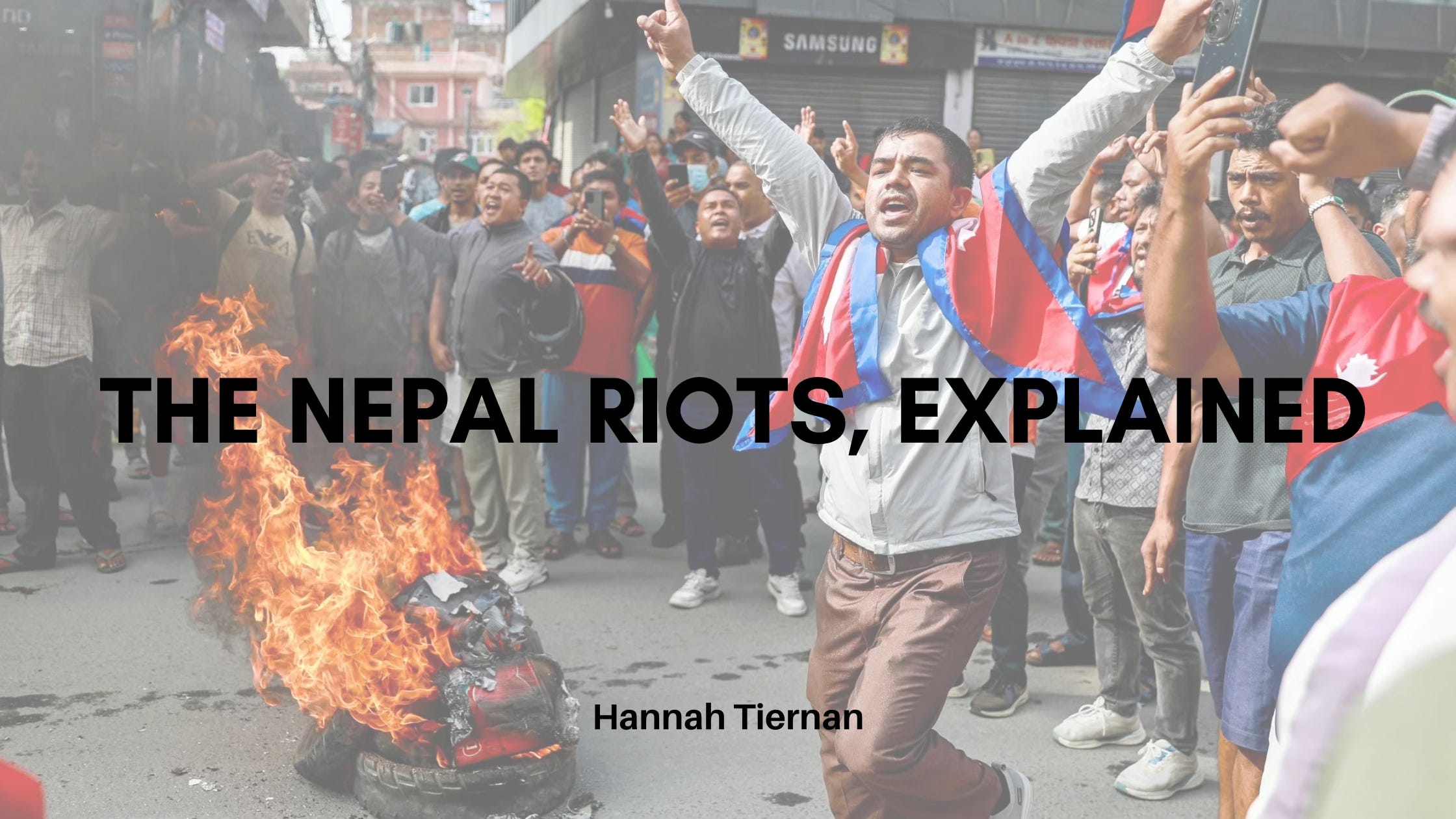
On Monday, reports stated that nineteen people had died as a result of clashes with police in Nepal. On Tuesday, three more were reported to have been killed. Hundreds of protesters were injured by rubber bullets, tear gas, water cannons, and batons. Nepal’s Chief of the Army Staff, General Ashok Raj Sigdel, stated that the police had to respond with force, as the protest had grown violent outside of the parliament in Nepal’s capital, Kathmandu.
Protests started in response to a ban on social media in the country. 26 different apps and websites were banned by the government, including WhatsApp and Instagram. The ban followed the sites’ failure to meet a deadline to register with Nepal’s Ministry of Communication and Information Technology. The government was accused of trying to stifle anti-corruption conversations on the sites. While the ban was indeed a catalyst for some of the worst unrest Nepal has seen in decades, protesters are also voicing their dissatisfaction with the country’s authorities, especially those involved in the ban and the leaders the people viewed as corrupt.
The ban on social media has been reversed since the protests started. Youngsters are still taking to the streets, finally calling for an end to “corrupt practices” in the government. On Tuesday afternoon, the prime minister, KP Sharma Oli, stepped down. Later, Singha Durbar, the collection of government buildings, was set alight. Many protesters celebrated the long-awaited downfall of a position that was considered “corrupt” and “self-serving”.
By Wednesday morning, the capital city was destroyed. The death toll had risen to 25. Buildings were still smoking; houses had been broken into. A curfew had been put into place following the two days of violence. 27 people had been arrested, for reasons including violence and the discovery of over 30 firearms. Army soldiers patrolled the streets, calling out “no unnecessary travel”. Some young people still walked the streets with plastic bags, beginning to clean up their city. Young Nepalis have voiced their desire for former Chief Justice Shushila Karki to step up as interim prime minister.
Army spokesman Raja Ram Basnet stated that “we are trying to normalise the situation first. We are committed to protecting the life and property of people.” Firefighters were deployed across the city to deal with the burning homes, which included the personal residence of Oli, the smouldering hotels, and the destroyed parliament buildings. Army vehicles patrol the streets, as the curfew is set to be in place until Thursday.
The anti-corruption protesters have expressed outrage at the lavish, privileged lives of the familiarity of government officials. Since the dissolution of the monarchy in 2008, Nepal has struggled economically, while its leaders boast about designer clothes, luxury holidays, and lavish, expensive ways of living. In July of 2024, a new coalition was formed within Parliament. This came after Oli tried to dissolve Parliament twice in 6 months in 2020 and 2021. Oli, serving his fourth term as prime minister, joined forces with Sher Bahadur Deuba, the president of the Nepali Congress, in 2016. The party leaders were set to take turns as prime ministers for 18 months each until the next general election, which is due to be in 2027. Since Oli has officially resigned, the political future of Nepal remains uncertain. The children of these unopposed leaders have been boasting about their luxury lifestyles on social media sites, which outraged the citizens of Nepal, many of whom rely on money sent from family members working in neighbouring countries. The hope among demonstrators is that the protests have succeeded in bringing an end to corruption in the Himalayan country and that the lives lost at the hands of police will not be in vain.